


Carbon cycle demands action
- Dec 1, 2025
- 5 min read
Carbon Cycle and the Negotiated Future: Act NOW!
Atrayee Basu
Climate change isn’t a distant crisis — it’s a full-scale assault on Earth’s carbon balance, a direct consequence of human ignorance and political inaction. The planet’s natural carbon cycle is now being ripped apart by relentless fossil fuel combustion, industrial expansion, and deforestation.
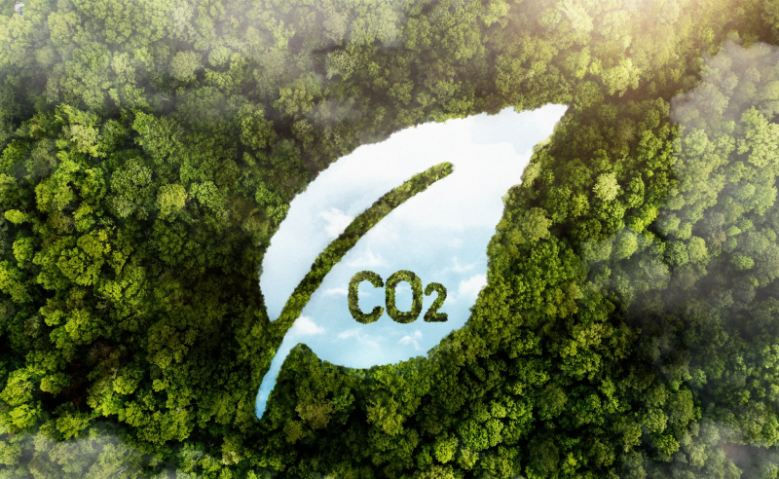
Forests, the planet's most powerful carbon absorbers, are now burning and degrading at rates far exceeding their natural recovery capacity. The Amazon rainforest, which stores an estimated 150–200 billion tonnes of carbon, has already lost nearly 17% of its cover.
Soils store nearly three times more carbon than the atmosphere. As global temperatures rise, microbial activity accelerates, increasing soil respiration. Studies estimate that for every 1°C of warming, soils could release an additional 15–30 gigatonnes of carbon over this century — potentially offsetting decades of emissions-reduction efforts.
The oceans have absorbed about 25–30% of anthropogenic CO₂ and over 90% of excess heat since the industrial era began. Ocean acidity has increased by roughly 30% since pre-industrial times, threatening coral reefs that support a quarter of all marine life and sustain food security for over three billion people.
To have a reasonable chance of staying below 1.5°C (legal benchmark) we must drive global CO₂ emissions from ~37–41 GtCO₂/yr today to near-zero within a few decades.
Sink Failure
Carbon sinks across both hemispheres — once thought to be reliable buffers of human emissions — are faltering under the combined pressures of warming, deforestation, and ecosystem degradation.
In the Southern Hemisphere, the Amazon rainforest, often called the “lungs of the planet,” has already crossed dangerous thresholds. Between 2010 and 2020, parts of the southeastern Amazon emitted up to 0.29 gigatonnes of CO₂ per year, largely due to deforestation and fire. Satellite observations and atmospheric monitoring by Brazil’s National Institute for Space Research (INPE) reveal regions that are now net carbon sources, as the CO₂ released by fire and decay surpasses photosynthetic absorption.
In the Northern Hemisphere, the Canadian boreal forest, once a massive carbon sink storing over 200 billion tonnes of carbon, has turned into a net source during some years due to record-breaking wildfires — including the catastrophic 2023 fire season, which released over 1 gigatonne of CO₂, roughly equal to Japan’s annual emissions. In Siberia, permafrost thaw and peat fires are accelerating, releasing trapped methane and CO₂ into the atmosphere.
The implication is stark: if sink degradation continues, the atmospheric CO₂ growth rate will accelerate even if fossil fuel use declines.
Extreme Events
The destabilization of carbon sinks is inseparable from ecosystem change and the rise of climate-driven extreme events — both consequences and catalysts of a broken carbon cycle.
During the 2019–2020 Australian bushfires, an estimated 715 million tonnes of CO₂ were released, temporarily doubling Australia’s annual emissions. These fires not only decimated forests but also reduced future carbon uptake by destroying vegetation and soils rich in organic carbon.
The Arctic is warming nearly four times faster than the global average, causing permafrost thaw and methane emissions from frozen soils — a ticking carbon time bomb.
The 2020 Siberian heatwave drove unprecedented wildfires that emitted more CO₂ than any previous Arctic event, while releasing long-trapped organic carbon into the air.
Together, these events underscore a terrifying feedback reality — every burned forest, thawing tundra, and forest replaced by a palm oil monoplantation not only emits carbon but also cripples the planet’s natural capacity to absorb it.
The question still remains the same: what are we going to do about it?
Human Activities and Climate Justice
The carbon cycle — Earth’s natural mechanism for balancing the exchange of carbon between the atmosphere, oceans, and biosphere — is being disrupted not only by industrial activity but also by two of humanity’s most destructive and short-sighted pursuits: war and extravagant space exploration in the name of “security” or “progress”.
Geopolitical Conflicts
Modern warfare is an environmental catastrophe disguised as geopolitics.
Wars & Military Emissions
The global military sector is estimated to be responsible for about 5.5% of global greenhouse gas emissions (≈ 2,750 Mt CO₂-e annually) in one authoritative estimate. For example, the Russia–Ukraine war (from February 2022) was estimated to have conflict-related emissions of ≈ 229.7 million mtCO₂-e (millions of tonnes) from active warfare and infrastructure damage.
The Gaza war (15-month conflict) produced direct emissions of ~1.9 million tCO₂-e, with the broader estimate including reconstruction rising to over 32.2 million tCO₂-e.
The NATO’s 2023 military spending (~US$1.34 trillion) was estimated to generate ~233 million tCO₂-e, surpassing annual emissions of some countries. According to an analysis, each additional US$100 billion in military spending leads to ~32 million tCO₂-e added emissions.
Wars & militarisation are significant and consistent sources of carbon emissions — not just because of fuel use in combat, but also infrastructure destruction, rebuilding, supply chains, and long-term environmental degradation.
Space Exploration and Emissions
A life-cycle assessment of launch vehicles reported that the average total emissions for a rocket are approximately 1.75 kt (1,750 t) CO₂ per launch. More common launch numbers: many rockets emit ~200-300 t CO₂ per launch.
In the space industry, rocket emissions have disproportionate impacts because they release pollutants (soot, alumina, black carbon) into the upper atmosphere/stratosphere, where they can alter radiative forcing, ozone chemistry and long-term atmospheric circulation more strongly than the same mass of emissions at ground level.

The Essence
The new space race is a race against Earth’s stability. Without urgent regulation and restraint, the stratosphere is becoming another dumping ground for corporate ambition and geopolitical posturing. While millions of people on Earth are urged to cut personal carbon footprints, billionaire-led companies burn tonnes of fuel to send luxury payloads and “space tourists” a few minutes above the atmosphere.
Major Polluters in the Space Industry
SpaceX, the company, is the largest single contributor to rocket-related emissions. The Starship — designed for Mars colonization — is expected to release 5,000 tonnes CO₂ per full flight. Roscosmos’s Soyuz rockets have launched thousands of missions over decades using highly polluting kerosene-based propellants. The European Space Agency conducted Ariane 5 and 6 rockets that rely on liquid hydrogen and oxygen, a relatively cleaner fuel, but the manufacturing and cryogenic storage processes still release significant upstream CO₂. Commercial Space Tourism is the most carbon-inefficient human activity on record. Each trip emits 50–75 tonnes of CO₂ per passenger, over 40 times the emissions of a transatlantic flight.
A Global Voice for Planetary Repair
The planet is speaking- the breakdown of the carbon cycle is not a slow-motion tragedy; it is an accelerating collapse, driven by our obsession with domination, consumption, and technological vanity. To restore balance, the world must act not as fractured nations but as a single, conscious species defending injustice. A just voice is not a political choice but a moral imperative. If the nations of the world can unite for war or for space conquest, they can unite for planetary peace. The time for negotiation has passed; the time for collective action is now. The Earth is not waiting — and neither should we.


Comments